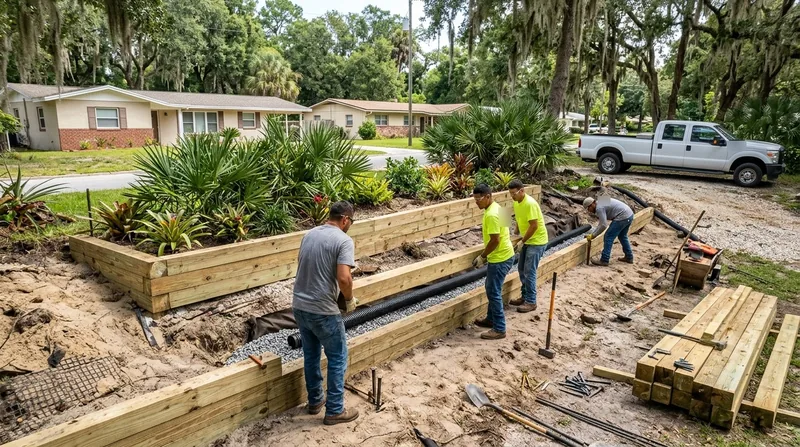




Timber Retaining Walls in Jacksonville offer a cost-effective way to terrace garden beds, stabilize gentle slopes, and define property lines across Jacksonville's flat, sandy coastal terrain. Built from pressure-treated lumber, timber walls work well for low-rise applications in residential settings, from Riverside's Craftsman bungalows under live oaks to the newer subdivisions in Nocatee and Oakleaf. However, Jacksonville's high water table, tropical storm rainfall, and aggressive termite populations mean timber walls demand honest assessment: they typically last 10 to 15 years before wood decay and pest damage require repair or replacement. We install, repair, and replace timber walls with a clear-eyed view of when timber makes sense and when a longer-lasting material like segmental block or concrete serves you better. If your wall is already leaning, cracked, or showing soft wood, our retaining wall repair team can evaluate whether it's salvageable or ready for replacement.
Why Timber Retaining Walls Matter in Jacksonville's Sandy, Humid Climate
Jacksonville's landscape sits on a sandy plain cut by the St. Johns River and its tidal creeks. Drainage through sandy soil is fast, but it also means fine sand washes out around wall joints, undermining the base. Add a high water table, summer thunderstorms that dump several inches in an hour, and termites thriving in the warm, humid subtropical environment, and timber walls face real pressure. A wall that might last 20 years in a dry climate can deteriorate in 10 to 12 years here. That doesn't mean timber is wrong for your property, but it does mean you need to know the timeline and the maintenance reality upfront.
- Timber walls absorb and shed water, but sand and clay around them can trap moisture against the wood, accelerating rot.
- Termites and carpenter ants colonize pressure-treated wood, especially in warm, humid conditions like Jacksonville experiences year-round.
- Settlement and shifting in sandy soil cause timber walls to lean or rack, particularly if the footing wasn't dug below the sand layer.
- Proper drainage and a solid foundation are non-negotiable if you want timber to perform well in Jacksonville.
- Regular inspection and maintenance, including checking for soft wood and pest damage, can extend the life of a timber wall by several years.
Understanding these failure modes helps you decide whether timber is the right material for your Jacksonville property or whether block, concrete, or stone will give you better long-term value.
Local reality: A timber wall in Arlington or San Marco holding back a garden bed on sandy fill will typically show softening and termite damage by year 10 to 12, especially if drainage isn't managed. This is not a design flaw, it's the climate. Plan for replacement or upgrade to a more durable material when that time comes.
For more information on how soil conditions and drainage affect wall longevity, consult the Duval County property and building resources or your local building department, which can advise on subsurface conditions in your specific neighborhood.
How We Install and Repair Timber Retaining Walls in Jacksonville
Our process starts with a site visit to assess soil type, drainage, water table depth, and the slope and height of the wall you need. We dig the footing below the active sand layer, compact the base, and install landscape fabric and gravel to manage water flow. We then set pressure-treated posts (typically 6x6 or 4x6) in concrete footings, bolt or lag the horizontal beams, and backfill with gravel and topsoil. For repair work, we inspect the existing wall, identify rot or pest damage, and either reinforce weak sections or recommend replacement if the structural integrity is compromised.
- We excavate the footing trench below the frost line and below unstable sand, compacting the base with a plate compactor for stability.
- We set pressure-treated posts in concrete footings spaced according to wall height and load, ensuring they're plumb and secure.
- We lag or bolt horizontal beams to the posts, creating a rigid frame that resists racking and settling.
- We backfill behind the wall with landscape fabric, drainage rock, and topsoil, creating a path for water to exit rather than pool.
- For repairs, we assess wood softness with a probe, check for insect damage, and either patch, reinforce, or recommend full replacement.
- We handle all site cleanup, grading, and final landscaping so your property looks finished and functions properly.
This methodical approach prevents the most common failure mode in Jacksonville: water trapped behind the wall, sand washing out, and wood rotting from the inside out. Our retaining wall drainage solutions are built into every timber installation we do.
Example: A homeowner in Ortega needed a timber wall to level a sloped garden bed under live oaks. We dug the footing 3 feet deep to get below the sand, set 6x6 posts in concrete, installed a French drain behind the wall, and backfilled with rock and topsoil. Two years later, the wall is still plumb and the wood is sound because water moves freely away from it.
Timber Retaining Wall Methods and Materials
| Approach | Description | Best for |
|---|---|---|
| Pressure-Treated Posts and Beams | 6x6 or 4x6 posts set in concrete footings, horizontal 2x8 or 2x10 beams lag-bolted to the posts, landscape fabric and gravel behind. | Garden bed terraces, low slopes, residential properties in Jacksonville and surrounding areas where budget and aesthetics favor wood. |
| Railroad Tie Replacement | Removing aged, creosote-treated railroad ties and replacing them with pressure-treated lumber or segmental block for better longevity and environmental safety. | Homes in older neighborhoods (Riverside, Avondale, Springfield) where timber walls are decades old and showing severe rot or pest damage. |
| Tiered Timber Walls | Multiple short timber walls stacked with level terraces between them, reducing the load on any single wall and improving drainage. | Steeper slopes or larger elevation changes where a single tall wall would be unstable or require expensive engineered design. |
| Repair and Reinforcement | Patching soft wood with epoxy or sister-boarding, adding bracing or additional posts to stabilize leaning walls, replacing individual beams. | Existing walls showing minor to moderate damage, when replacement is not yet necessary or when the owner wants to extend the wall's life. |
Timber Retaining Walls Cost in Jacksonville: What to Expect
Timber retaining wall installation in Jacksonville typically starts at $20 per square foot for straightforward installations on level or gently sloping ground with good access and stable soil. A 30-foot wall, 3 feet tall, would be approximately 90 square feet, putting the base cost in the $1,800 to $2,200 range before site-specific factors. However, several conditions can move that number higher: deep footings needed to reach stable soil below sand, difficult site access requiring hand work or equipment rental, backfill material and drainage rock, and any necessary permitting or engineered design for taller or more complex walls.
Jacksonville's sandy soils and high water table often require deeper footings than other regions, which increases labor and materials. If your property is in a flood zone or near the St. Johns River, or if your wall will support a driveway or structure, you may need engineered drawings and a building permit, adding 2 to 4 weeks to the timeline and $500 to $1,500 to the cost depending on complexity. Repair jobs (reinforcement, wood patching, or partial replacement) typically range from $800 to $3,000 depending on damage extent. Full replacement of a failed timber wall usually runs $25 to $35 per linear foot, depending on height and site conditions.
The best way to know your actual cost is to request a free estimate. We'll visit your property, assess soil conditions, access, drainage needs, and any permitting requirements, then give you a clear, itemized quote with no hidden fees. Most estimates are ready within 24 hours.
For a detailed breakdown of pricing by service type and material, visit our full pricing page.
Timber Retaining Walls Near Me: What Jacksonville Homeowners Should Know When Hiring a Contractor
Finding a qualified contractor for timber retaining walls in Jacksonville requires more than a quick internet search. Look for a company that is licensed and insured for retaining wall work in Florida, can show references from recent projects in your area (Jacksonville Beach, Orange Park, Atlantic Beach, or wherever you are), and understands local soil and drainage conditions. Ask whether the contractor has experience with pressure-treated lumber, proper footing depth in sandy soils, and how they manage water behind walls. Get at least two or three estimates so you can compare approach, materials, and timeline, not just price.
- Verify that the contractor holds a current Florida contractor license and carries general liability and workers compensation insurance.
- Ask for references from at least three recent retaining wall projects in Jacksonville or nearby, and call those homeowners to ask about quality and timeline.
- Confirm that the contractor understands permit requirements for your specific property and jurisdiction (setbacks, height limits, and surcharge rules vary by neighborhood).
- Discuss whether your HOA (if you have one) requires approval for retaining walls and whether the contractor has handled HOA projects before.
- Get a written estimate that itemizes labor, materials, permits, and site cleanup, with a clear start and completion date.
- Ask about warranty or guarantee on the work, and whether the contractor offers follow-up inspections or maintenance advice.
A reputable contractor will be transparent about timber's lifespan in Jacksonville's climate and will recommend alternatives (block, concrete, or stone) if they believe those materials better suit your long-term needs. Contact us at (904) 490-7307 for a free consultation, or visit our service areas page to confirm we operate in your neighborhood.
Timber Retaining Walls in Jacksonville: Pricing Guide
| Service | Price | Details |
|---|---|---|
| Timber Wall Installation (Standard) | Starting at $20/sq ft | Pressure-treated posts and beams, concrete footings, landscape fabric, gravel backfill, site cleanup included for typical residential slopes |
| Timber Wall Repair or Reinforcement | $800-$3,000 | Patching soft wood, adding bracing, replacing individual beams, or sister-boarding to stabilize leaning walls depending on damage extent |
| Timber Wall Replacement (Full) | $25-$35 per linear foot | Complete removal of failed wall, new footing, posts, and beams installed, backfill and grading, adjusted for height and soil conditions |
| Engineered Design and Permits | $500-$1,500 | Required for walls above 4 feet or supporting structures; adds 2 to 4 weeks to timeline but ensures code compliance and longevity |
| Travel and Site Visit | Included | No separate mileage or call-out fee for Jacksonville and surrounding service areas; free estimate within 24 hours |
| Free Estimate | No cost | On-site assessment of soil, drainage, access, and wall condition with itemized quote and no obligation to hire Jacksonville Retaining Wall |
Indicative pricing, the exact cost depends on square footage, finish, and site access. Free personalized estimate within 24h at (904) 490-7307.


