Signs Your Retaining Wall Needs Attention
A leaning retaining wall is never something to ignore. Unlike a small cosmetic crack in your driveway, a wall that tilts or bulges outward indicates that soil pressure is overwhelming the structure's ability to hold back earth and water. In Jacksonville, where our subtropical climate brings heavy rainfall and sandy, shifting soil conditions, retaining walls face constant stress.
The first warning sign is visible lean or tilt. If you stand back and notice the wall is no longer vertical, or if family members comment that it looks off, that's a red flag. You may also see horizontal retaining wall crack repair needs, where cracks run parallel to the ground rather than vertically. Water seeping through the wall, pooling behind it, or erosion at the base are equally serious indicators. Bowing, bulging, or sections that appear to be moving outward all suggest that the wall's structural integrity is compromised. Don't wait for catastrophic failure. The sooner you assess the problem, the more options you'll have for addressing it.
Understanding the Root Causes of Leaning Retaining Walls
Before you can decide between Retaining Wall Repair and full Retaining Wall Replacement, it's important to understand why your wall is leaning in the first place. Poor drainage is the leading culprit. When water accumulates behind a retaining wall and has nowhere to go, it creates hydrostatic pressure that pushes against the structure. Over time, this relentless force causes the wall to tilt forward or bulge.
Inadequate foundation or base preparation also plays a major role. If the wall was installed on unstable or improperly compacted soil, it will gradually settle unevenly, causing one section to lean more than another. In Jacksonville's sandy, coastal environment, soil composition can vary dramatically from one property to another, making proper site assessment critical during installation. Additionally, tree roots growing behind the wall, freeze-thaw cycles (though less common in Florida), and even the natural weight of soil shifting over decades can all contribute to leaning. Identifying the root cause helps determine whether the wall can be salvaged through targeted repairs or whether replacement is the safer, more cost-effective long-term solution.
When Repair Is the Right Choice
Not every leaning retaining wall requires complete removal and replacement. If the lean is minor, the structural damage is limited, and the wall's foundation is still sound, repair may be a viable and economical option. Retaining Wall Repair typically involves addressing the underlying cause, such as installing proper drainage systems, repairing cracks with specialized sealants or epoxy injections, and reinforcing weak sections with additional bracing or tie-backs.
A professional inspection is essential to determine repairability. If the wall is leaning less than two inches over its full height, shows no signs of active movement, and has no major structural cracks, repair work often succeeds. Improving drainage is frequently the most impactful repair step. Installing or repairing perforated drain pipes, adding gravel backfill, and ensuring water can flow away from the wall can dramatically reduce pressure and stabilize the structure. For Concrete Retaining Walls, crack repair using modern epoxy or polyurethane injection methods can restore structural continuity and prevent water infiltration. These solutions are typically less disruptive and less expensive than full replacement, making them attractive for homeowners looking to preserve their landscape while solving the immediate problem.
When Replacement Is Necessary
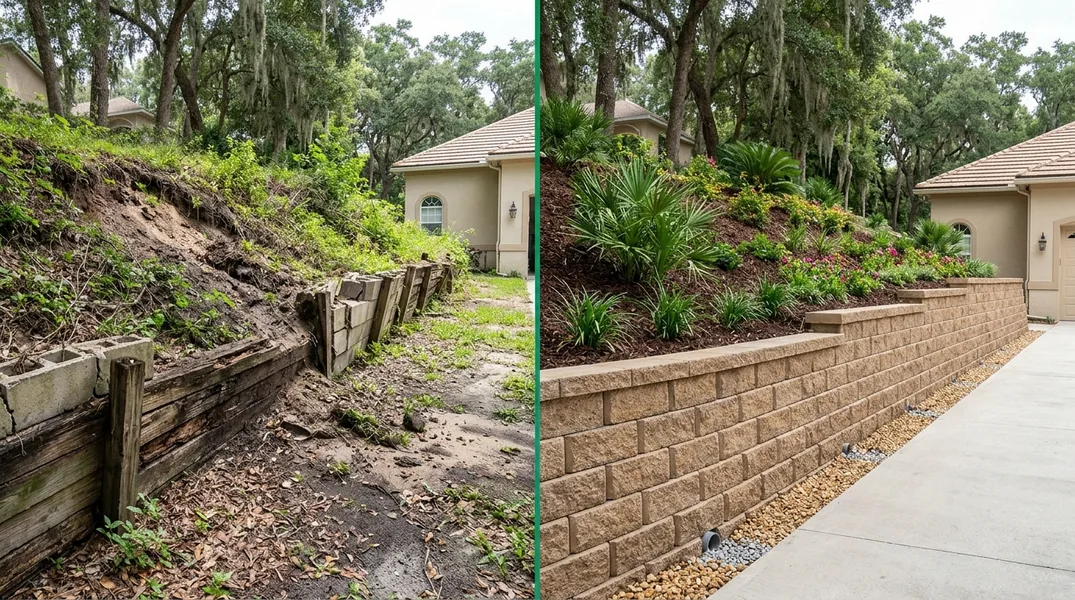
In some cases, attempting to repair a leaning retaining wall is like putting a bandage on a broken bone. If the wall is severely tilted, shows multiple large cracks, has shifted more than a few inches, or is actively moving, replacement is almost certainly the safer choice. A wall in advanced failure poses a genuine safety risk to your home, your family, and your neighbors. Catastrophic collapse can damage foundations, destroy landscaping, and create costly liability issues.
Additionally, if the original installation was fundamentally flawed, repairing it will only delay the inevitable. Replacing the wall gives you the opportunity to correct design and installation mistakes, upgrade materials, and implement modern drainage solutions from the start. Retaining Wall Replacement in Jacksonville also allows you to choose materials better suited to our climate and soil conditions. Whether you opt for Concrete Retaining Walls, segmental blocks, timber, or stone, a new installation will be designed to handle our local rainfall, humidity, and soil movement. While replacement requires more time and investment upfront, it provides peace of mind and typically costs far less over the wall's lifetime than repeated repairs to a failing structure.
Retaining Wall Repair and Replacement Cost in Jacksonville: What to Budget
Understanding the financial side of your decision is crucial. Pricing for retaining wall work varies widely based on the wall's size, material, degree of damage, and accessibility. A minor repair, such as drainage improvement or crack sealing on a small section, might cost anywhere from $500 to $2,000. More extensive repairs involving structural reinforcement, epoxy injection, or partial rebuilding can range from $3,000 to $8,000 or more, depending on scope.
Full Retaining Wall Replacement typically costs significantly more, often between $5,000 and $25,000 or higher for residential properties, again depending on length, height, and material choice. While this sounds like a major expense, remember that a new wall is an investment in your property's stability and value. Many homeowners find that the long-term savings from avoiding repeated repairs, plus the increased property value and peace of mind, justify the upfront cost. To get an accurate estimate tailored to your specific situation, reach out to Jacksonville Retaining Wall for a free estimate. Our team will assess your wall, identify the underlying issues, and provide honest guidance on whether repair or replacement makes the most sense for your budget and goals.
Choosing a Professional Retaining Wall Contractor Near Me
Whether you decide on repair or replacement, hiring an experienced, licensed contractor is non-negotiable. A leaning retaining wall is a structural issue that requires expertise in soil mechanics, drainage design, material selection, and local building codes. An inexperienced contractor might misdiagnose the problem, recommend unnecessary work, or perform repairs that fail within a few years.
When evaluating contractors in the Jacksonville area, ask for references from recent projects, verify their licensing and insurance, and request detailed written estimates that explain what work will be performed and why. A reputable contractor will conduct a thorough site inspection, discuss the root cause of the problem, and explain both repair and replacement options before recommending a course of action. Jacksonville Retaining Wall brings decades of local experience to every project. We understand the unique challenges posed by Jacksonville's soil, climate, and drainage patterns. If you're concerned about a leaning wall, don't hesitate to call us at (904) 490-7307 or visit our website to request a free estimate. We'll provide honest, expert advice to help you make the right decision for your property.
Looking for a professional retaining wall contractor in Jacksonville? Jacksonville Retaining Wall responds fast for all your retaining wall needs.
Get a Free QuoteOur services: Retaining Wall Installation · Retaining Wall Repair · Retaining Wall Replacement